

Leaders from the Centers for Disease Control and Prevention, Health and Human Services and nearly 20 multi-national companies
“Global health security is a team sport. Government has an important role, but we cannot do this alone.” – Dr. Erica Schwartz, Director of the CDC
September 24, 2026 | New York, New York
Leaders from the CDC, HHS, and nearly 20 multinational companies across a range of industries convened in New York to discuss global health security and determine how to strengthen public-private collaboration in preparing for and responding to health emergencies. The roundtable was hosted by the Private Sector Roundtable on Global Health Security (PSRT) and Rabin Martin.
The group convened one day before the UN High-Level Meeting on Pandemic, Prevention, Preparedness and Response and focused on:
- CDC’s priorities under new leadership: trust, readiness and partnership
- Benefits of harnessing private sector capabilities to support the U.S. government’s domestic and global preparedness and response efforts – and interest in better understanding companies’ capabilities
- How to improve public trust in the agency – including looking to companies to help with building trust
The discussion was candid and action oriented, covering a range of potential areas for partnership with the private sector as a technical resource – from medical supplies transport and vaccine delivery to health communications, workforce support, and community health.
Participants from the CDC and HHS:

Dr. Erica Schwartz, CDC Director
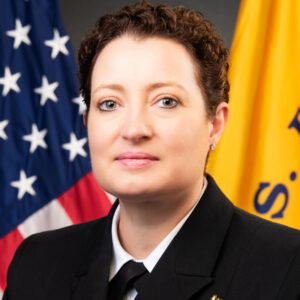
Paige Armstrong, CDC Director of Global Health Center

Dr. Henry Walke, CDC Director for Officer of the Director
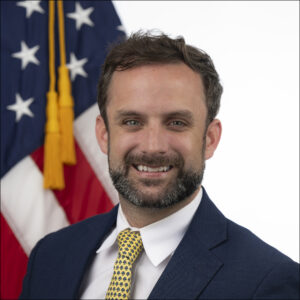
Ken Callahan, Chief Policy Advisor to HHS Secretary
Discussion Highlights
1. Trust and communication
Dr. Erica Schwartz, newly confirmed Director of the CDC, emphasized trust as essential to effective public health work and a cornerstone of her vision for the CDC. As an example, Dr. Schwartz reflected on lessons from the COVID-19 pandemic and noted how changing guidance from the CDC contributed to public confusion and a loss of trust in the agency. She underscored the importance of rebuilding trust by communicating clearly about what is known from a scientific perspective, what remains uncertain, and why recommendations may change as evidence evolves.
The group discussed the opportunity that companies, community organizations, and other trusted partners have in reaching people with credible information and amplifying messages from the CDC during health emergencies.
2. Surveillance and early detection of health threats
Also referencing the COVID pandemic, participants discussed the urgent need to strengthen early detection and expand testing capacity in the immediate wake of a disease outbreak. The group identified strategies to respond to emerging threats earlier and more effectively – for example scaling rapid, accessible testing more quickly by drawing on resources from the private sector.
CDC leaders agreed that additional areas where private sector expertise would be valuable include diagnostics, manufacturing, logistics, and supply chains that can be mobilized during an emergency.
3. Coordinating public and private resources
Companies raised the issue of missed opportunities to leverage extensive on-the-ground resources to improve emergency response efforts. One specific example cited was related to diagnostic platforms. Currently, laboratory and testing systems are not always linked, which limits visibility into available capacity. The result may be underutilization of valuable resources, including data, to support a faster and more effective response.
Better coordination between the private sector and government counterparts could help improve understanding of resources in country and how they could be deployed to mitigate the impact of a health emergency while continuing to deliver routine health care. Participants highlighted the importance of building on existing health care infrastructure rather than establishing new systems during a crisis.
Companies represented:
- Amgen
- bioMérieu
- Chevron
- Eli Lilly
- Emergency BioSolutions
- Gilead
- GSK
- Illumina
- Johnson & Johnson
- Merck
- Microsoft
- Novartis
- Novo Nordisk
- Phillips
- Roche
- UPS
- Waters Corporation
Looking Ahead
The roundtable closed with the CDC’s commitment to work through the PSRT to engage companies more consistently in joint problem-solving. As a next step, the CDC will identify specific areas where private sector expertise could be valuable and bring in other relevant agencies, including the Administration for Strategic Preparedness and Response, for focused sessions to match needs with capabilities and formalize collaboration.
As all participants agreed, building strong relationships between government and the private sector now – before the next emergency emerges – will be critical to enabling a faster and more effective response. The roundtable was an excellent starting point to forge these vital connections.